Most traders pay $50-200/month for market data that delays by 15 minutes. That made sense in 2015. Not anymore. Free live market data platforms in 2026 deliver real-time prices for stocks, crypto, and forex without charging a dime. The catch? Most people don't know where to look.
I tested 12 platforms over three months. Opened them side-by-side during market hours. Checked refresh speeds. Watched how they handled volatile sessions. Half of them lagged during high-volume crypto pumps. Three crashed when GameStop spiked 40% in two hours. Only a few kept up.
What Free Live Market Data Actually Means in 2026
"Free" doesn't always mean real-time. Some platforms show you Bitcoin's price from 5 minutes ago and call it live. Others refresh every 30 seconds but skip weekend crypto moves entirely. Real-time means the price updates within 1-2 seconds of the exchange reporting it.
The best platforms pull from multiple exchanges and average them. That's why Coinbase might show BTC at $67,420 while your free tool shows $67,418. Both are live — one's just more accurate.
Platforms That Actually Deliver Real-Time Market Data Free
Vunelix handles stocks, crypto, and forex on one dashboard. No signup wall. No "upgrade to pro" pop-ups after 10 clicks. You get heatmaps that show entire markets color-coded by performance. Green sectors stand out instantly. Red ones too.
The screeners let you filter 15,000+ crypto coins by volume, market cap, or 24-hour change. Same for US stocks. You're not scrolling through alphabetical lists — you set thresholds and watch what passes through. I use it to catch altcoins pumping 30%+ before they hit Twitter.
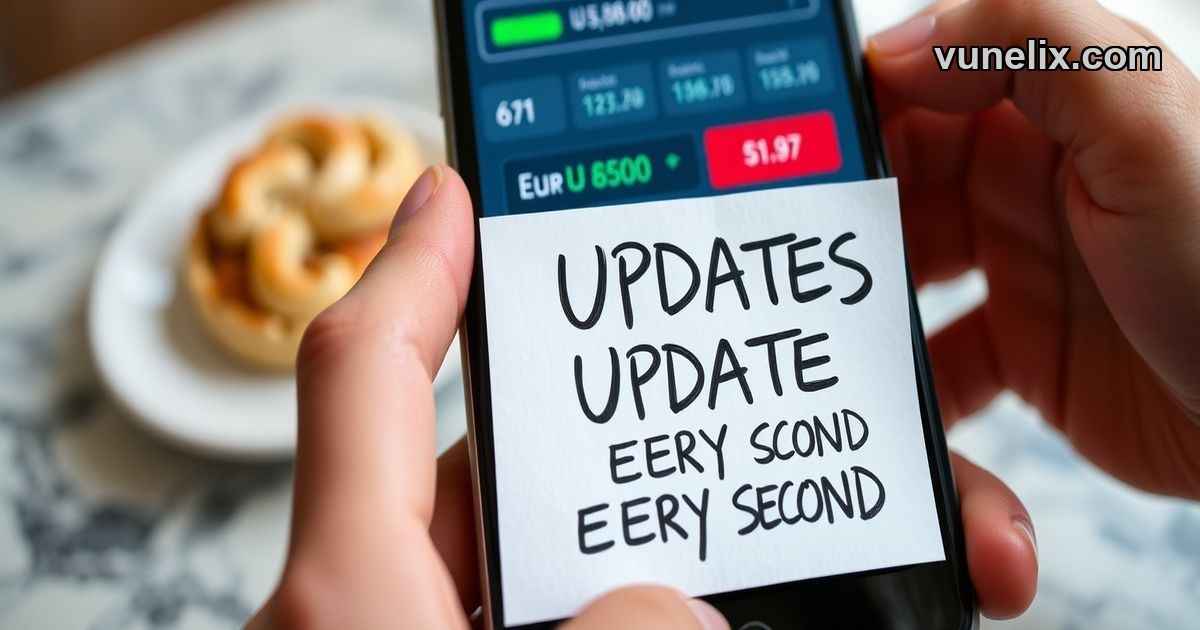
Their currency converter updates every second during forex sessions. Type EUR/USD and it pulls the rate before you finish typing. Cross-rates table shows 20+ pairs at once. No clicking into each one separately.
How to Use Free Live Market Data Without Paying Later
Free tools stay free if they don't upsell constantly. Check the homepage first visit. If you see "limited time trial" or "7 days remaining" anywhere, that's not free — that's a teaser. Look for platforms that show full data upfront with zero countdown timers.
Test it during volatile hours. Open it at 9:35am EST when US markets spike. Or during a Federal Reserve rate announcement. If the page freezes or prices stop updating, the "free" tier can't handle real traffic. You need something built for load.
Bookmark the pages you use most. Real-time market data free platforms don't require accounts but they also don't save your settings. I keep tabs open for crypto heatmap, stock screener, and EUR/USD chart. Faster than navigating menus every session.
Best Free Live Market Data Features Worth Using
Heatmaps compress 500 stocks or 2,000 crypto coins into one screen. Each box represents an asset. Size = market cap. Color = price change. You scan it in 10 seconds and know which sectors moved today. I check the US stock heatmap every morning before reading news. Tells me what happened overnight without scrolling.
Live screeners beat watchlists. Watchlists are static — you add 20 tickers and check them daily. Screeners are dynamic. Set "volume above $500M, price change above 5%, market cap under $10B" and it shows you everything that qualifies right now. Different coins every day. That's how you find breakouts early.
Cross-rates tables matter more than people think. You want to trade GBP/JPY but most platforms show you GBP/USD and USD/JPY separately. You're doing math in your head. A good cross-rates table shows GBP/JPY directly. And 30 other pairs. Updated live. No mental gymnastics.
Free Live Market Data Review: What Actually Works
Speed is the difference between good and useless. I've seen platforms that claim "real-time" but update every 10 seconds. That's not real-time during a flash crash. Bitcoin can drop $2,000 in 10 seconds. If your screen shows the old price, you're trading blind.
Coverage matters too. Some free tools only track the top 100 crypto coins. Fine if you're trading BTC and ETH. Not fine if you're looking at mid-cap altcoins or new listings. Same for stocks — if it only covers S&P 500, you're missing 90% of the market.
- Refresh rate under 2 seconds during high volatility
- No forced account creation to view prices
- All major asset classes on one platform
- Heatmaps and screeners included, not locked behind paywall
- Works on mobile without glitching every scroll
Common Mistakes When Choosing Free Market Data Tools
People pick platforms based on design. Flashy charts and dark mode themes look professional but mean nothing if the data lags. I've used beautiful platforms that delayed by 30 seconds during earnings reports. And ugly ones that updated faster than my broker's feed.
Another mistake: trusting one source. Cross-check prices between two platforms occasionally. If Vunelix shows BTC at $68,000 and another tool shows $67,400, one of them is pulling stale data. Most of the time, the one with higher volume and more exchange integrations is right.
Don't ignore mobile performance. Half your trading decisions happen away from your desk. If the platform doesn't load on your phone or the charts break when you zoom, you're stuck guessing. Test it on 4G, not just home wifi. That's where most free tools fail.
Why Most Free Platforms Can't Compete in 2026
Data costs money. Exchanges charge for API access. Most free platforms cut corners — they show delayed data and call it "near real-time", or they limit how many assets you can track. The ones that survive without ads or paywalls usually have another business model. Premium features for institutions, or data licensing deals.
Vunelix runs on ad support and premium API tiers for developers. End users get full access to live prices, heatmaps, screeners, charts. No degraded experience. That's rare. Most competitors either force you to upgrade after 10 days or show you data that's 15 minutes old.
What I'd Pick for Daily Trading
I keep three tabs open all day. Vunelix for live market data, my broker for execution, and TradingView for deep chart analysis. Vunelix handles discovery — finding what's moving, filtering noise, checking correlations across asset classes. I don't pay for any of them except the broker commissions. That setup hasn't failed me in two years.
If you're just starting, skip the paid subscriptions until you're consistently profitable. Free tools in 2026 are good enough to make money. Once you're clearing $5K/month, then consider premium data. But not before.