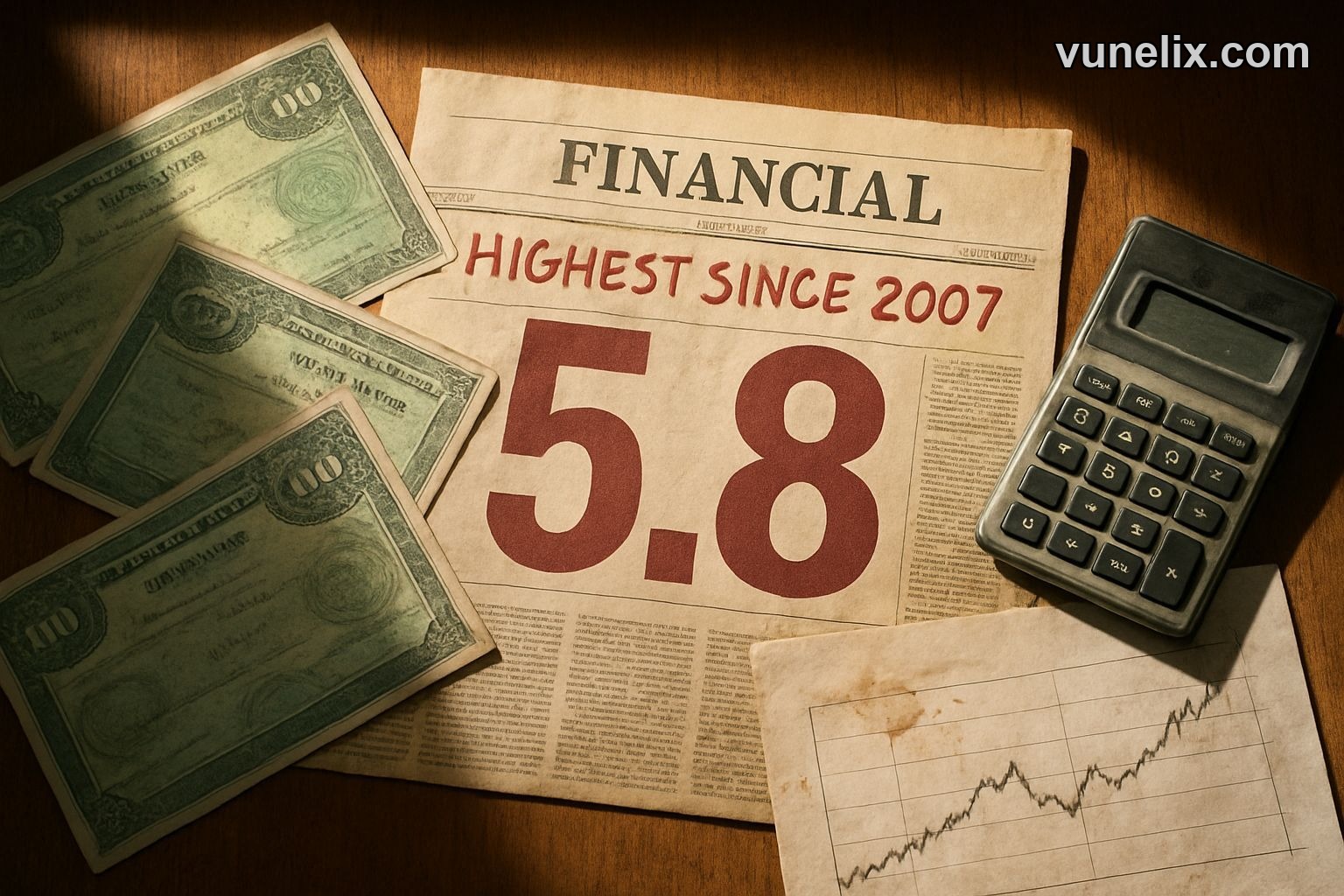
The 10-year Treasury yield crossed 5.8% on March 5th. That's the highest since mid-2007, right before everything fell apart. I've been watching this climb for months and even I didn't think we'd get here this fast.
People keep asking if this is the top. I don't know. Nobody does. But what I do know is that every asset class is repricing right now — stocks, real estate, private equity, crypto. When the risk-free rate jumps this much, everything else has to justify its existence all over again.
Why the 10-Year Matters More Than Fed Rates
The Fed sets short-term rates. The market sets long-term rates. And right now the market is screaming that inflation isn't done. The Fed paused hikes back in January at 4.75%, but the 10-year kept climbing anyway. That's the bond market saying "we don't believe you."
This yield is what mortgages price off. Corporate debt. Student loans. Everything. A 5.8% 10-year means 30-year mortgages are pushing 8% in some markets. I'm seeing friends who locked in refis at 3% in 2021 just sitting tight, nobody's moving.
Stocks took it hard. The S&P dropped 4.2% in two days after the yield broke 5.5%. Tech got hit worse — anything with no earnings and a "story" got crushed. Makes sense. Why would I buy a speculative growth stock yielding nothing when I can get 5.8% risk-free?
What Pushed Yields This High
Three things all hit at once. First, the January inflation print came in at 3.8% year-over-year when everyone expected 3.4%. Not a huge miss, but enough to kill the soft landing narrative for a week.
Second, the Treasury announced another $1.2 trillion in issuance for Q2. That's a lot of bonds to absorb. More supply, higher yields. Basic stuff but it adds up.
Third — and this is the one nobody wants to talk about — foreign buyers are pulling back. China, Japan, even some European central banks are trimming their Treasury holdings. When your biggest customers start walking away, you have to offer a better price. In bonds, better price means higher yield.
Where I'm Seeing Opportunities
I locked in some 6-month T-bills last week at 5.6%. Yeah, that's lower than the 10-year, but the curve is still inverted and I don't want to tie up money for a decade right now. If you're sitting in cash earning 0.5% in a savings account, you're getting destroyed by inflation. At least grab some short-term Treasuries.
Real estate is the other side. Higher mortgage rates mean fewer buyers, which means prices come down. I'm watching a few markets where listings are piling up — Phoenix, Austin, parts of Florida. Not saying buy yet, but the setup is forming. You can check price action across markets using the stock screener for REITs if you want exposure without buying physical property.
Dividend stocks are getting interesting again too. Utilities, consumer staples, things yielding 4-5% with actual cash flow. They got boring when growth was ripping, but now? A 4.5% dividend plus modest growth starts looking pretty good when the "risk-free" rate is only 5.8%. For tracking sector moves I've been using the stock heatmap on Vunelix to see what's actually holding up.
The Mortgage Problem Nobody's Talking About
Housing is frozen. If you bought in 2021 with a 3% mortgage, you're not selling unless you absolutely have to. Moving means giving up that rate and refinancing at 8%. So inventory stays tight even though demand is falling. Weird market.
New construction slowed way down. Builders can't make the math work when their buyers need 8% loans. I talked to a developer in Texas who said his pre-sales for a new project dropped 60% in three months. He's still building because he already started, but he's not breaking ground on anything new.
This is deflationary for housing eventually, but it takes time. The lag between higher rates and lower prices is long — 12 to 18 months usually. We're maybe six months into this cycle.
What Happens If Yields Go Higher
6% is the next psychological level. If we break that, things get messy fast. Corporate credit spreads would blow out. More companies would pull IPOs. M&A would freeze up even more than it already has.
I'm also watching the dollar. Higher US yields usually mean stronger dollar, which is already happening. That's bad for emerging markets, bad for commodities priced in dollars, bad for US exporters. It's a tightening feedback loop.
The flip side — if inflation actually does come down and the Fed cuts later this year like some people expect, yields could drop fast. That would be the opposite trade. Bonds would rally, stocks would rip, housing might catch a bid. I'm not betting on it, but it's possible.
Where I'm Positioned
Short-term Treasuries, some cash, a few beaten-down dividend stocks I've been watching for months. I sold most of my long-duration bonds back in January when the 10-year was at 4.9%. Wish I'd sold more, but I got some of it right. I'm using the charting tool to track TLT and other bond ETFs — the technical picture is still ugly.
Crypto is down but I'm not touching it here. Bitcoin lost 18% since yields started climbing in February. Makes sense — it's a risk asset with no cash flow. When real yields are this high, why would anyone allocate to BTC? Maybe that changes, but not yet.
I'm also avoiding anything with heavy debt loads. Companies that borrowed cheap in 2020-2021 and now have to refinance at 7-8%? That's a disaster waiting to happen. You can filter by debt-to-equity ratios and find these landmines pretty easily.
The 10-year will probably touch 6% before this is over, and when it does, the real selloff in risk assets begins.